Building Waste Water Treatment Systems—No Problem
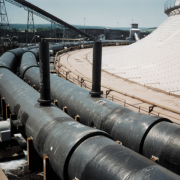
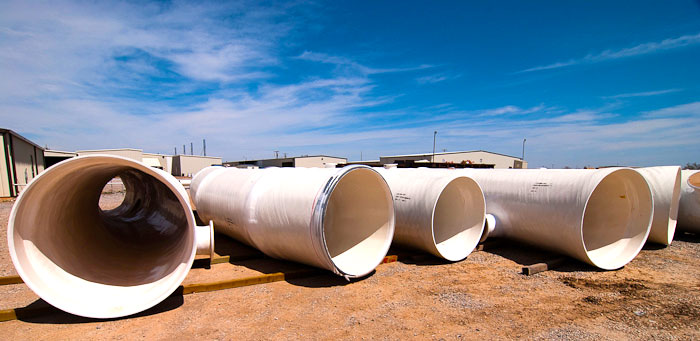
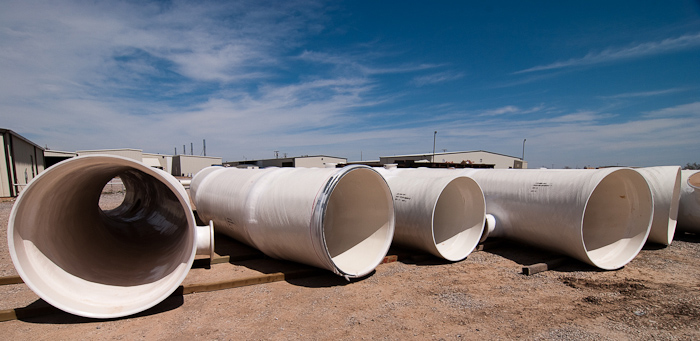 Every year there are technological advancements. New materials are available today that once were just an idea or considered novel. In wastewater treatment, chemical processing, desalination, or other corrosive services, Fiber Reinforced Polymers (FRP) are becoming common place, replacing conventional materials, and have the advantage of light weight (1/6 the weight of steel), cavitation resistance, low coefficient of friction, and corrosion resistance.
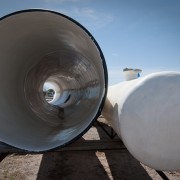
Our series 5000 FRP pipe has been specially designed for severely corrosive industrial services, over a wide temperature range from sub-zero to 180⁰f and is suitable for earth burial at all depths with selection of wall thickness, ribs, and filament wind angle .
Series 5000 is a filament wound fiberglass reinforced premium vinyl ester epoxy composite pipe with UV inhibition. It’s recommended for a wide range of applications including brine and brackish water, potable water, chlorine, oxidizing chemicals and acids, alkalies, and non-oxidizing acids—to name a few.
This FRP pipe is ideal for salt or seawater handling and will also withstand chemicals that are commonplace in wastewater treatment and water purification, such as, chlorine dioxide, hydrogen sulfide, and sodium hypochlorite.
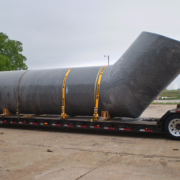
Our FRP pipe can be designed, formulated, and manufactured per your specifications, industry requirements and is meets ASTM D-2996 Classification Type 1, Grade 2, and Class E standards. Similarly, the resins used in Series 5000 pipe meet the requirements of F.D.A. Regulations 21-CFR-175.105 and 21-CFR-177.2420, respectively. Diameters, ranging from 1/2″ Ø up to 168″ Ø; wide range of lengths available.
As a custom manufacturer of pipe and fittings, we can design and build pipe to handle burial conditions ranging from live loads due to highway and rail traffic – to earth loads of 100 feet or greater. We even have experience with underwater installations. Our engineers will welcome the opportunity to work with you on a pipe design, backfill selection and installation methods to meet your specific requirements.
Specifications:
- ASTM D2996
- Classification Type 1, Grade , and Class E
- FDA Regulations 21-CFR-175.105
- FDA 21-CFR-177.2420
Composition:
- Nominal 40 to 50 mil Glass Veil and/or Nexus Reinforced Corrosion Liner
- Filament Wound Structural Overlap
- A premium grade vinyl ester resin,
- pigmented dark grey for UV inhibition
- Custom formulations available
FRP has proven its worth in a wide range of applications. With longer life cycles, lower installation costs, design flexibility, and superior corrosion and abrasion resistance it’s quickly becoming the go-to material throughout many markets the world over.