Beetle Plastics
  • Home
  • About
    • Our Mission
  • Services & Capabilities
    • Fiberglass Pipe & Duct
    • Fiberglass Tanks & Vessels
    • Pipe Support Systems
  • Custom FRP Fabrications
    • About Fiberglass
    • Fiberglass Benefits
    • Fiberglass Uses
    • Industrial Applications
    • Custom Fiberglass Components
    • Capabilities
  • Resources
    • Brochures & Flyers
    • Technical Papers
    • Photo Gallery
    • Presentations
    • Case Studies
    • Links
    • Product Showcase
  • Articles
  • Request a Quote
  • Contact Us
  • Menu Menu

Connect With Us

  • Twitter
  • YouTube
  • Facebook
  • LinkedIn
  • Google+
  • RSS

Fiberglass Pipe Thermal Expansion and Contraction
July 19, 2012/in Blog

frp material properties, frp pipe

FRP Pipe Properties: Thermal Expansion and Contraction

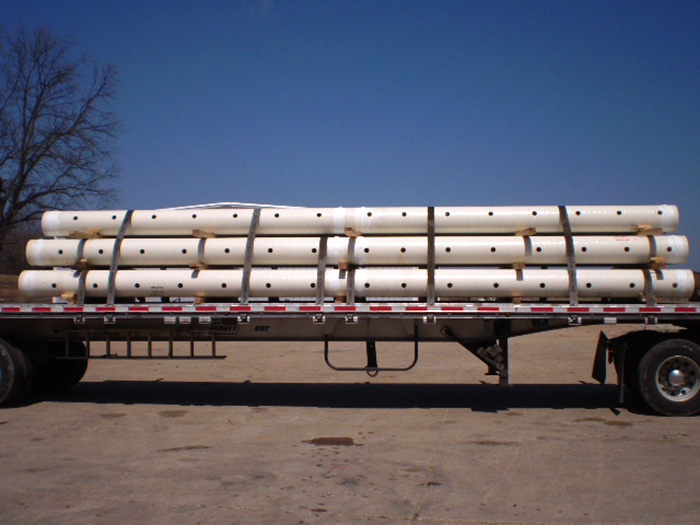
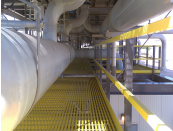
Beetle Plastics fiberglass pipe is filament wound and, therefore, has different thermal expansion in the hoop and axial direction. In the hoop direction, the thermal expansion is about the same as steel. However, in the axial direction, the thermal expansion of the fiberglass pipe is about twice that of steel.

The relatively low modulus of elasticity of the fiberglass pipe is an advantage which should be considered in the design of a piping system. Since thermal forces are smaller, restraining equipment (guides, anchors, etc.) need not be as strong or heavy as for steel piping. There is some growth due to end load from pressure in the piping system; but experience has shown that this length change does not need to be considered in designing a fiberglass piping system. FRP composite piping systems can handle thermal shocks between maximum rated operating temperatures and -40°F, unless the pipe joints are mechanical joint style.

To determine the effects of expansion and contraction within a piping system, it is necessary to know:

  1. The design temperature conditions.
  2. The type and size of pipe.
  3. The layout of the system including dimensions and the thermal movements, if any, of the terminal
  4. points.
  5. The limitations on end reactions at terminal points as established by equipment manufacturers.
  6. The temperature changes for expansion are calculated by subtracting the installation temperature (temperature at time of final tie in) from the maximum design temperature.

Temperature changesfor contraction are calculated by subtracting the minimum design temperature from the installation temperature. Expansion and contractions of above ground fiberglass pipe may be handled by several different methods.

Four methods are:

  1. Direction Changes
  2. Anchors and Guides
  3. Mechanical Expansion Joints
  4. Expansion Loops

Guides, Expansion Loops, and Mechanical Expansion Joints are installed in straight pipelines which are anchored at both ends. The experience of users of FRP composite piping systems has shown that if directional changes cannot be used to accommodate thermal expansion and contraction, then the guide spacing design approach is usually the most economical method.

Operating experience with piping systems indicates that it is a good practice to anchor long straight pipe runs of above group piping at approximately 300-foot intervals. These anchors prevent pipe movement due to vibration, water hammer, etc.. Also, an anchor is used wherever a pipe size change occurs. When joining FRP composite piping to other piping systems, the adjoining system MUST be securely anchored to prevent the transfer of thermal end loads.

Contact us today and we can arrange a test installation in your plant comparing Beetle Plastics abrasion resistant pipe with your current piping and duct materials.
Tags: Fiberglass Pipe, FRP Pipe, FRP Pipe Properties, Large Diameter Pipe
Share this entry
  • Share on Facebook
  • Share on X
  • Share on Pinterest
  • Share on LinkedIn
  • Share by Mail
https://beetleplastics.com/wp-content/uploads/2015/06/beetle-plastics-logo-sm.png 0 0 theVR https://beetleplastics.com/wp-content/uploads/2015/06/beetle-plastics-logo-sm.png theVR2012-07-19 15:33:002012-07-19 15:33:00Fiberglass Pipe Thermal Expansion and Contraction
You might also like
Lined Pipe vs. Unlined Pipe – Corrosion Resistant Pipe
Fiberglass Pipes and Fittings for a Chlorine Processing Plant
Lined Pipe vs. Unlined Pipe – Pipe Strength and Structural Integrity
Large Diameter Pipe for Water Circulating Project
Improvements to Abrasion Resistant Pipe made from FRP Composites
FRP Pipe Industry Leaders

Latest Blog Posts

  • Large Fiberglass TanksAugust 5, 2014 - 8:19 am
  • Muriatic Acid Storage and HandlingJuly 22, 2014 - 7:57 am
  • Wastewater Systems and FiberglassJune 23, 2014 - 8:00 am
  • General Fiberglass Reinforced Polymer CompositionApril 21, 2014 - 8:00 am
  • FRP Material Properties Put to UseApril 15, 2014 - 8:00 am
  • More Fiberglass Terminology!April 7, 2014 - 8:00 am
  • Custom Fiberglass FabricationsMarch 31, 2014 - 8:00 am
  • Sulfuric Acid StorageMarch 18, 2014 - 12:09 pm
  • Fiberglass TerminologyMarch 6, 2014 - 8:00 am
  • The Cost of CorrosionMarch 4, 2014 - 8:00 am

REQUEST A QUOTE

download-the-brochures-sm

Posts By Category

Abrasion Resistance Caustic Soda Chemical Processing Corrosion Resistance Custom Fabrication Fiberglass Pipe fiberglass pipe fittings fiberglass reinforced plastic Fiberglass reinforced polymer Fiberglass Tanks and Vessels Fiber Reinforced Polymers Fracking FRP FRP Composites FRP Composite Tanks FRP Duct FRP Ductwork FRP material properties FRP Pipe FRP Pipe Properties FRP repair HCl Large Diameter Pipe Large Pipe Limestone Slurry Mining and Minerals news Pipe Support Power Plants structural FRP Sulfuric Acid Sulphuric Acid Tanks Wastewater

Memberships And Affiliations

acfelogoacmalogonceologo midwest-cooling-towers-small

membership

Copyright © 2026 - Beetle Plastics - OKLAHOMA - 405-224-4622 - [ website by VisualRush ]
Link to: Improvements to Abrasion Resistant Pipe made from FRP Composites Link to: Improvements to Abrasion Resistant Pipe made from FRP Composites Improvements to Abrasion Resistant Pipe made from FRP Composites Link to: How to Properly Bury Fiberglass Piping Link to: How to Properly Bury Fiberglass Piping How to Properly Bury Fiberglass Piping
Scroll to top Scroll to top Scroll to top