
Beetle Plastics
  • Home
  • About
    • Our Mission
  • Services & Capabilities
    • Fiberglass Pipe & Duct
    • Fiberglass Tanks & Vessels
    • Pipe Support Systems
  • Custom FRP Fabrications
    • About Fiberglass
    • Fiberglass Benefits
    • Fiberglass Uses
    • Industrial Applications
    • Custom Fiberglass Components
    • Capabilities
  • Resources
    • Brochures & Flyers
    • Technical Papers
    • Photo Gallery
    • Presentations
    • Case Studies
    • Links
    • Product Showcase
  • Articles
  • Request a Quote
  • Contact Us
  • Menu Menu

Connect With Us

  • Twitter
  • YouTube
  • Facebook
  • LinkedIn
  • Google+
  • RSS

5 Things You Should Know About Corrosives and FRP

March 14, 2013/in Blog

corrosion resistanceIn our last post we talked about the need for education about FRP, and now we’re putting our money where our mouth is. Here are the 5 things you need to know about FRP and corrosives.

  1. When acids and bases attack and corrode metals; dangerous gases can often be given off.  For example, common bases such as sodium hydroxide and potassium hydroxide in concentration have been known to attack aluminum, zinc, galvanized metal and tin and give of hydrogen gas. 

FRP can be formulated to be corrosion resistant and have demonstrated long life cycles in extreme industrial environments.  For example, FRP gas scrubbing systems, at a phosphate fertilizer plant, exposed to aggressive flu gases consisting of hydrochloric acid, hydrofluoric acid, and phosphate dust at 60˚ C had a service life of 50 years—stainless steel could not withstand the highly corrosive mixture.  There are many more examples.

  1. Hydrogen gas is flammable and will burn or explode if an ignition source is present. 

Because FRP will not corrode there is no risk of releasing flammable gases such as hydrogen.  Hydrogen gas forms explosive mixtures with air if it is 4–74% concentrated and with chlorine if it is 5–95% concentrated. H2 mixtures can spontaneously explode by spark, heat or sunlight if proper conditions are present. H2 reacts with every oxidizing element. Hydrogen can react spontaneously and violently at room temperature with chlorine and fluorine.  Why take a chance?

  1. Contact with corrosives can damage containers, equipment, installations, and building components made from unsuitable materials.

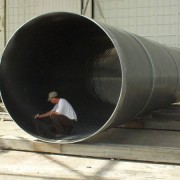
FRP will not corrode; it will thrive and endure in stringent conditions where other materials fall short or fail.  FRP has been used successfully in a wide variety of applications in chemical processing, mining and minerals, nuclear, desalination, waste water treatment, nuclear, pulp and paper, and petrochemical. 

  1. Some corrosives are flammable, combustible, and can easily catch fire, burn, or explode.

FRP offer versatility, durability, design flexibility and superior containment.  FRP can be formulated to be corrosion and abrasion resistant, as well as, smoke and fire retardant.  FRP are not combustible.  FRP will not spark and will enhance the safety of your project.

  1. Corrosives can be incompatible with other chemicals.  They may undergo dangerous chemical reactions that yield or give off toxic fumes.

Why take a chance with toxic fumes, dangerous chemical reactions, and explosions? Use the proper material to protect your equipment, installations…and your future.  Protect your investments, enhance safety and employ FRP—the cost-effective choice that will solve many of your corrosion problems. 

Tags: Corrosion Resistance, Fiberglass reinforced polymer
Share this entry
  • Share on Facebook
  • Share on X
  • Share on Pinterest
  • Share on LinkedIn
  • Share by Mail
https://beetleplastics.com/wp-content/uploads/2015/07/corrosion-resistance3.jpg 290 387 theVR https://beetleplastics.com/wp-content/uploads/2015/06/beetle-plastics-logo-sm.png theVR2013-03-14 09:00:002013-03-14 09:00:005 Things You Should Know About Corrosives and FRP
You might also like
FRP vs Aluminum: A Snapshot Comparison of Two Materials
International Corrosion Awareness Day
Sulfuric Acid Storage
Wastewater Systems and Fiberglass
FRP Mining Solutions Solve Corrosion Problems
The Cost of Corrosion

Latest Blog Posts

  • Large Fiberglass TanksAugust 5, 2014 - 8:19 am
  • Muriatic Acid Storage and HandlingJuly 22, 2014 - 7:57 am
  • Wastewater Systems and FiberglassJune 23, 2014 - 8:00 am
  • General Fiberglass Reinforced Polymer CompositionApril 21, 2014 - 8:00 am
  • FRP Material Properties Put to UseApril 15, 2014 - 8:00 am
  • More Fiberglass Terminology!April 7, 2014 - 8:00 am
  • Custom Fiberglass FabricationsMarch 31, 2014 - 8:00 am
  • Sulfuric Acid StorageMarch 18, 2014 - 12:09 pm
  • Fiberglass TerminologyMarch 6, 2014 - 8:00 am
  • The Cost of CorrosionMarch 4, 2014 - 8:00 am

REQUEST A QUOTE

download-the-brochures-sm

Posts By Category

Abrasion Resistance Caustic Soda Chemical Processing Corrosion Resistance Custom Fabrication Fiberglass Pipe fiberglass pipe fittings fiberglass reinforced plastic Fiberglass reinforced polymer Fiberglass Tanks and Vessels Fiber Reinforced Polymers Fracking FRP FRP Composites FRP Composite Tanks FRP Duct FRP Ductwork FRP material properties FRP Pipe FRP Pipe Properties FRP repair HCl Large Diameter Pipe Large Pipe Limestone Slurry Mining and Minerals news Pipe Support Power Plants structural FRP Sulfuric Acid Sulphuric Acid Tanks Wastewater

Memberships And Affiliations

acfelogoacmalogonceologo midwest-cooling-towers-small

membership

Copyright © 2026 - Beetle Plastics - OKLAHOMA - 405-224-4622 - [ website by VisualRush ]
Link to: FRP Corrosion Control: Education Can Improve Opportunities Link to: FRP Corrosion Control: Education Can Improve Opportunities FRP Corrosion Control: Education Can Improve Opportunities Link to: A Tale of Two Materials – Chemical Resistance of FRP vs Alloys in Wet Processes Link to: A Tale of Two Materials – Chemical Resistance of FRP vs Alloys in Wet Processes A Tale of Two Materials – Chemical Resistance of FRP vs Alloys in Wet...
Scroll to top Scroll to top Scroll to top