
Beetle Plastics
  • Home
  • About
    • Our Mission
  • Services & Capabilities
    • Fiberglass Pipe & Duct
    • Fiberglass Tanks & Vessels
    • Pipe Support Systems
  • Custom FRP Fabrications
    • About Fiberglass
    • Fiberglass Benefits
    • Fiberglass Uses
    • Industrial Applications
    • Custom Fiberglass Components
    • Capabilities
  • Resources
    • Brochures & Flyers
    • Technical Papers
    • Photo Gallery
    • Presentations
    • Case Studies
    • Links
    • Product Showcase
  • Articles
  • Request a Quote
  • Contact Us
  • Menu Menu

Connect With Us

  • Twitter
  • YouTube
  • Facebook
  • LinkedIn
  • Google+
  • RSS

FRP Solves Hydrochloric Acid Storage and Transportation Problems

January 29, 2013/in Blog

hydrochloric acid storage tanksHydrochloric Acid (HCL) also known as Muriatic Acid is a corrosive, stable mineral acid that is clear to slightly yellowish in color.  Its versatility lends itself well to many industrial uses including hydraulic fracturing, pulp and paper, steel-making, PVC manufacturing, and chemical processing.  Similarly, it’s also used in the production of high-fructose corn syrups. HCL, while being versatile and widely used is also highly corrosive which makes maintaining supply and hauling a challenge.  

The History

HLC wasn’t always as widely used as it is today. Fuming Hydrochloric Acid’s  history can be traced back to the Middle Ages when common salt was mixed with “Oil of Vitriol” (Sulphuric Acid) to produce Hydrochloric Acid.  The word ‘Muriatic’ literally means ‘pertaining to salt or brine’.  Fast forward a few hundred years and HCL made its recorded debut in the 17th century.  However, it was not until market forces during Industrial Revolution, and an increased demand for alkaline products, that large-scale production of Fuming Hydrochloric Acid took place. Along with the large-scale production of HLC came large-scale needs for corrosion resistant vessels and piping for production, chemical storage, and transportation.

How corrosive is HLC?

In concentrations above 25%, HCL is considered highly corrosive and must be handled with extreme care and caution.  In concentrations of approximately 35% and higher, HCL is referred to as fuming HCL or fuming Muriatic Acid. 

Special requirements for handling, transporting, and storing HLC

When handling, transporting or storing HCL it is essential that is kept cool, dry and well ventilated. Industry specific drainage, venting, and corrosion resistant flooring can also present barriers to safe HCL storage. When storing or transporting HCL in large quantities, you must have a non-reactive, corrosion resistant chemical storage tank, pipe, vessel, or basin. 

The Solution

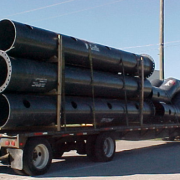
Fiber Resistant Polymers (FRP) provide a high quality, durable, strong, corrosion resistant solution to this problem. At Beetle all of our FRP pipe, tanks, vessels, and containers for corrosive fluid services have a corrosion barrier or liner. The type and thickness of this corrosion barrier/liner depends upon the specific service environment.

FRP is an ideal solution not just because of its corrosion resistance, but also because of its versatility. FRP custom tanks, pipes, or vessels can come in a wide variety of sizes from ½” to 14’ in diameter. Also, custom FRP corrosion resistant piping is lightweight when compared to other materials and can be fine-tuned to fit tanker trucks and detailed to meet specific esthetic requirements.  The high quality, durability, strength, corrosion resistance, and customization all make FRP an ideal solution for the challenges associated with HLC.

Tags: Corrosion Resistance, fiberglass reinforced plastic
Share this entry
  • Share on Facebook
  • Share on X
  • Share on Pinterest
  • Share on LinkedIn
  • Share by Mail
https://beetleplastics.com/wp-content/uploads/2015/07/corrosion-resistance.jpg 512 384 theVR https://beetleplastics.com/wp-content/uploads/2015/06/beetle-plastics-logo-sm.png theVR2013-01-29 09:00:002013-01-29 09:00:00FRP Solves Hydrochloric Acid Storage and Transportation Problems
You might also like
Chlorine Storage and Handling Using Fiberglass Tanks and Pipe
FRP Applications for Common Fracking Chemicals
Corrosion Resistance: FRP for Copper Recovery Systems
What Makes a Superior FRP Fracking Tank?
General Fiberglass Reinforced Polymer Composition
Chemical Handling: Corrosion Resistant Tanks and Vessels

Latest Blog Posts

  • Large Fiberglass TanksAugust 5, 2014 - 8:19 am
  • Muriatic Acid Storage and HandlingJuly 22, 2014 - 7:57 am
  • Wastewater Systems and FiberglassJune 23, 2014 - 8:00 am
  • General Fiberglass Reinforced Polymer CompositionApril 21, 2014 - 8:00 am
  • FRP Material Properties Put to UseApril 15, 2014 - 8:00 am
  • More Fiberglass Terminology!April 7, 2014 - 8:00 am
  • Custom Fiberglass FabricationsMarch 31, 2014 - 8:00 am
  • Sulfuric Acid StorageMarch 18, 2014 - 12:09 pm
  • Fiberglass TerminologyMarch 6, 2014 - 8:00 am
  • The Cost of CorrosionMarch 4, 2014 - 8:00 am

REQUEST A QUOTE

download-the-brochures-sm

Posts By Category

Abrasion Resistance Caustic Soda Chemical Processing Corrosion Resistance Custom Fabrication Fiberglass Pipe fiberglass pipe fittings fiberglass reinforced plastic Fiberglass reinforced polymer Fiberglass Tanks and Vessels Fiber Reinforced Polymers Fracking FRP FRP Composites FRP Composite Tanks FRP Duct FRP Ductwork FRP material properties FRP Pipe FRP Pipe Properties FRP repair HCl Large Diameter Pipe Large Pipe Limestone Slurry Mining and Minerals news Pipe Support Power Plants structural FRP Sulfuric Acid Sulphuric Acid Tanks Wastewater

Memberships And Affiliations

acfelogoacmalogonceologo midwest-cooling-towers-small

membership

Copyright © 2026 - Beetle Plastics - OKLAHOMA - 405-224-4622 - [ website by VisualRush ]
Link to: Chlorine Storage and Handling Using Fiberglass Tanks and Pipe Link to: Chlorine Storage and Handling Using Fiberglass Tanks and Pipe Chlorine Storage and Handling Using Fiberglass Tanks and Pipe Link to: Corrosion Resistance Makes FRP Ideal for Handling Sodium Hypochlorite Link to: Corrosion Resistance Makes FRP Ideal for Handling Sodium Hypochlorite Corrosion Resistance Makes FRP Ideal for Handling Sodium Hypochlorite
Scroll to top Scroll to top Scroll to top